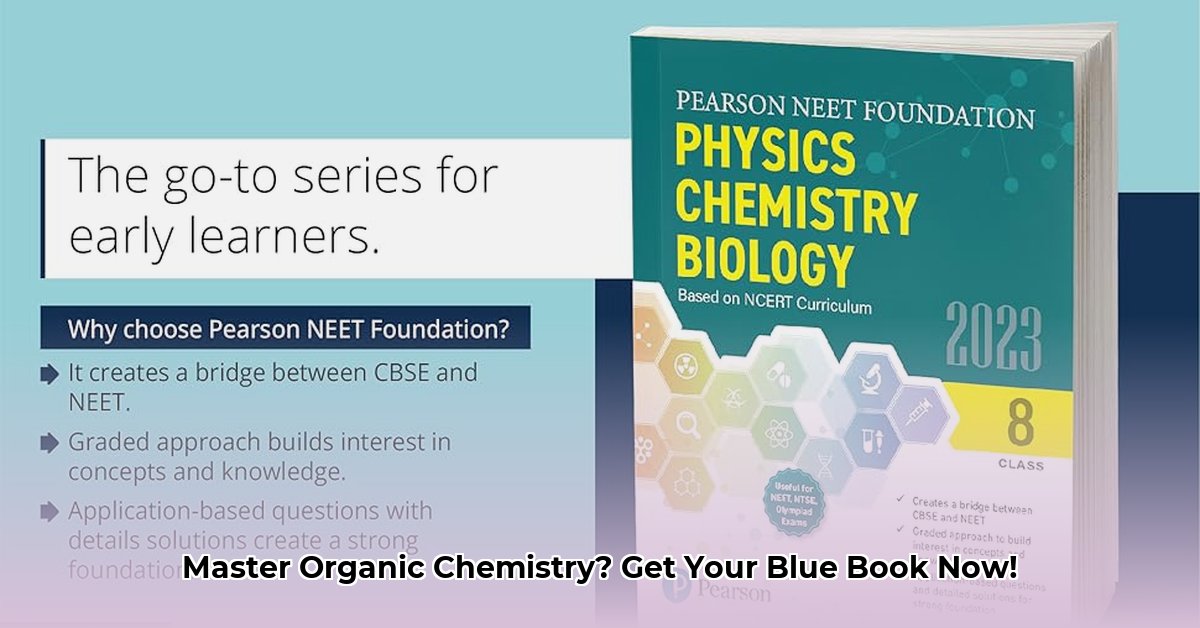
Mastering JEE Organic Chemistry: A Structured Learning Guide
Let's be honest: conquering the JEE Organic Chemistry section feels like scaling a mountain. It's a vast landscape of reactions, mechanisms, and concepts. But this guide provides a structured path to success, transforming daunting challenges into manageable steps. We move beyond simple memorization to a deep understanding of why reactions occur, empowering you to confidently tackle any JEE question. This isn't just a cheat sheet; it's a strategic roadmap to mastery.
Why Organic Chemistry Stumps Even the Brightest Students
Many students struggle to connect theory and practice in organic chemistry. They memorize facts but lack the deeper understanding needed for problem-solving. This leads to frustration and low scores. But with a structured approach, this challenge can be overcome. Are you ready to transform your understanding of organic chemistry?
Conquer Organic Chemistry: A Step-by-Step Action Plan
This isn't about cramming; it's about building a strong foundation. We'll break down the learning process into manageable steps, ensuring a solid understanding for exam success.
Step 1: Mastering the Fundamentals (Building Blocks)
Before tackling complex reactions, solidify your understanding of basic concepts: nomenclature (naming organic compounds), isomerism (different structures with the same formula), bonding (how atoms connect), and fundamental organic reactions. A strong foundation guarantees easier progress in later stages.
Step 2: Understanding Reaction Mechanisms (Unlocking the Secrets)
Reaction mechanisms are the stories of molecular transformations. Visualize electron flow – the movement of electrons dictates the reaction's progression. Understanding the why behind reactions is more effective than just memorizing the what. This deep comprehension improves long-term retention and problem-solving skills.
Step 3: Conquering Named Reactions (Making it Stick!)
Numerous named reactions require learning. Instead of rote memorization, use active learning techniques: flashcards, mind maps, or even creating mnemonics to improve retention and recall.
Step 4: Problem-Solving Mastery (Practice Makes Perfect)
Organic chemistry is applied knowledge. Solve problems consistently, starting with easier ones and gradually increasing difficulty. Analyze solutions thoroughly—understand each step, identify errors, and learn from mistakes. Practice with past JEE papers to simulate exam conditions and build confidence.
Step 5: Resource Recommendations (Expanding Your Toolkit)
While a "Blue Book SKM Sir PDF download" might seem appealing, prioritize credible resources. Utilize a variety of materials for a well-rounded understanding. This often includes leveraging free online resources like Khan Academy and MIT OpenCourseWare. Note that the quality of materials varies considerably, so select sources carefully.
Step 6: Consistent Review (Space it Out!)
Spaced repetition is far more effective than last-minute cramming. Regularly review notes and practice problems. This process strengthens long-term retention, significantly aiding knowledge consolidation for the long term.
Common Mistakes to Avoid: Pitfalls to Sidestep
- Over-reliance on Memorization: Focus on understanding the underlying principles.
- Insufficient Practice: Consistent problem-solving is critical.
- Ignoring Mistakes: Analyze errors to pinpoint areas for improvement.
- Lack of Resource Diversification: Multiple resources provide a broader perspective.
Recommended Resources: Beyond the "Blue Book"
While searching for the "Blue Book SKM Sir PDF Download" is understandable, consider the following:
| Resource Type | Examples | Benefits |
|---|---|---|
| Textbooks | Numerous excellent organic chemistry textbooks exist. Select one that best aligns with your learning style | Comprehensive coverage, detailed explanations, and practice problems. |
| Online Courses | Khan Academy, Coursera, edX | Flexible scheduling, interactive learning, often free or low-cost. |
| Practice Problem Books | JEE-specific books provide targeted practice | Mimics exam difficulty and style, and helps to identify weaknesses. |
| Study Groups | Peer learning, collaboration, and shared resources | Increases engagement and provides different perspectives on problem-solving. |
Mastering JEE Organic Chemistry is a journey, not a sprint. Consistent effort, smart strategies, and diverse resources are key to your success. Conquer the challenge!
⭐⭐⭐⭐☆ (4.8)
Download via Link 1
Download via Link 2
Last updated: Sunday, April 27, 2025